

Custom Search
|
Algaecides & Bacteria | Deicers & Bubblers | Weed Removal | Liquid Bacteria | Pond Pumps & Fountains | Aeration | Winter Pond Care | Algae Control | Pond Liner | Muck Pellets | Build a Solar Aerator | Rotary Vane Compressors | Floating Fountains | Building a Pond | Linear Air Compressors & Pumps | Weighted Airline | Diffusers & Airstones | Bacta-Pur Bacteria | Solar Aeration Systems | DC & Battery Operated Pumps | Windmill Aeration | Dock Bubbler Packages | Building a Waterfall | Dyes & Colorants | Consultations | Questions & Answers | Links & Resources | Eurasian Milfoil | | Mosquito Control | Pondkeeper Treatments | Aeration Systems | Septic Bacteria | Grease Trap Blocks | Compost Aeration | Dissolved Oxygen Meters | SOTR & Pumping Rates | Duckweed Control | Pond Plans & Pond Building Books & Guides || News on Ponds | Pond Pictures | Pond Care Strategies
| Portable
Generators Back-up power for emergency power supply great for aeration systems, hunters and de-icer systems I recieve countless emails every year from duck hunters who want to build a bubbler system for their duck hunting group and ask about solar power. Solar power can be an option but hauling in a portable generator is also a good idea if you don't have a power supply within a few hundred yards. Portable generators are also perfect for emergency back-up power during emergencies and storms or civivl un-rest. Understanding the differences and terms of gas and diesel powered AC and DC power generation is the key to not buying a piece of junk from Walmart that can't even keep your beer fridge cold. And if you see it on ebay you should ask yourself a deep question! I always recommend you buy new and not a used generator if possible to take advantage of the manufacturer's warranty. Generator Feature/Benefit Analysis Feature: Continuous Rating is the amount of wattage the generator can supply on a continuous basis. This is where you start when you talk about the size or capacity of the generator. Check the manufacturer's specification plate for this rating. The big colourful model number on the side is probably not the continuous rating. Benefit: This is the electrical load that the generator can support on a continuous basis. Continuous means for periods of a few hours at a time, not 24 hours a day for days at a time. Generators manufactured to higher quality standards (Heavy Duty) would be expected to run for longer periods of time. Feature: Maximum Rating is the amount of wattage the generator can supply for short periods of time. Benefit: This is the electrical load the generator can support for short periods of time. Short periods of time means from 2 or 3 seconds to 5 or 10 minutes every hour. Most generators restrict the extra current needed for starting electrical motors to this maximum. Ask your retailer "How much, for how long, how often?" to get a true sense of this value.
Feature: Surge Rating is the amount of wattage the generator can supply for a very short term, as when starting an electric motor. Benefit: Most manufacturers of small portable generators do not quote or support a surge rating. Where quoted, a surge rating is typically in the range of 2 times the maximum rating for 2 to 3 seconds. A high surge rating ensures that you can start larger induction motors that have a high starting current requirement. Feature:
Brush or Brushless Design describes the method used to transfer
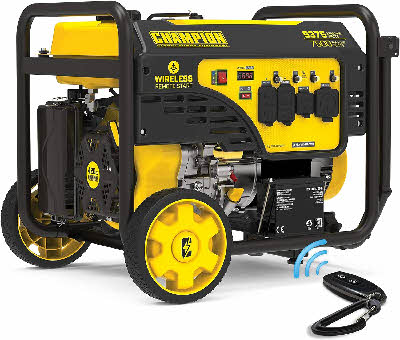
electric current from or to the rotating component of the generator. Feature: Voltage Regulator or Voltage Regulation addresses a feature of generators designed to regulate the output voltage being produced. Ideally, output voltage should be at or close to 120 or 240 volts. Ontario Hydro's extreme range for voltage at a rural service entrance is 212 to 254 volts. Without regulation, voltage would change as the load and/or engine speed (frequency) change. Benefit: The ability of a generator to maintain voltage in a narrow range around 120 or 240 volts is critical in situations where loads (particularly electric motors) are regularly cycled on and off. The effectiveness of voltage regulation is designed into each generator model, and varies significantly from model to model. Higher priced units generally (but not always) will have better regulation. The only meaningful way of expressing the level of voltage regulation is as a + or - percentage above or below the rated voltage. For example, 240 volts with a rating of ±2% would mean the voltage range would be 235.2V to 244.8V. For units without a specific plus or minus value it is not uncommon to find voltage output varying by as much as ±15% to 20%. If your usage involves significant variation in load values, or if you will be running sensitive electrical equipment, or if you plan to run the generator for significant numbers of hours, voltage regulation in the ±2% to 5% may be worth the extra cost. Feature: Disconnect Breaker is a breaker designed to shut off all power output from the generator. Benefit: A safety feature, designed to switch off in a short circuit or significant overload situation. Also allows power to be turned off during connection to or disconnect from load. Not all portable generators have this feature. In direct hookups to electrical sub-panels this is the preferred system. Feature: Circuit Breakers have the same function on a generator as in the regular electrical panel in your house. Generally each circuit or plug has its own circuit breaker. Benefit: Automatically trips if there is a short circuit or an overload, preventing damage to the generator or electrical equipment connected to circuit. Some generators have a main disconnect breaker as well as protection for each circuit. This combination gives the greatest protection for generator and personal safety. No fuses to replace. Feature: Non-fuse Breaker is another name for Circuit or Disconnect Breakers. Benefit: No fuses to replace. WEN 56475 4750-Watt Portable Generator with Electric Start Our Selection of Portable Generators are now listed on Amazon  As an Amazon affiliate we may recieve payment for purchases made through Amazon. 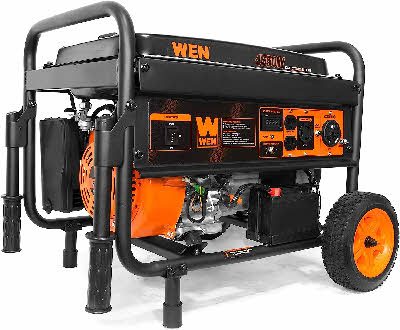 Extremely quiet operation is comparable to the sound of a normal conversation according to the US Department of Health and Human Services EPA III and CARB Compliant 79.7 cc 4-stroke OHV engine produces 2000 surge watts and 1600 rated watts Great for campgrounds, construction sites, tailgates and power outages Produces clean power to safely operate and prevent damage to sensitive electronics such as smart phones, tablets, televisions and computers Includes two three-prong 120V receptacles, one 12V DC receptacle and one 5V USB port Pulsar Portable Generators Our Selection of Portable Generators are now listed on Amazon As an Amazon affiliate we may recieve payment for purchases made through Amazon. 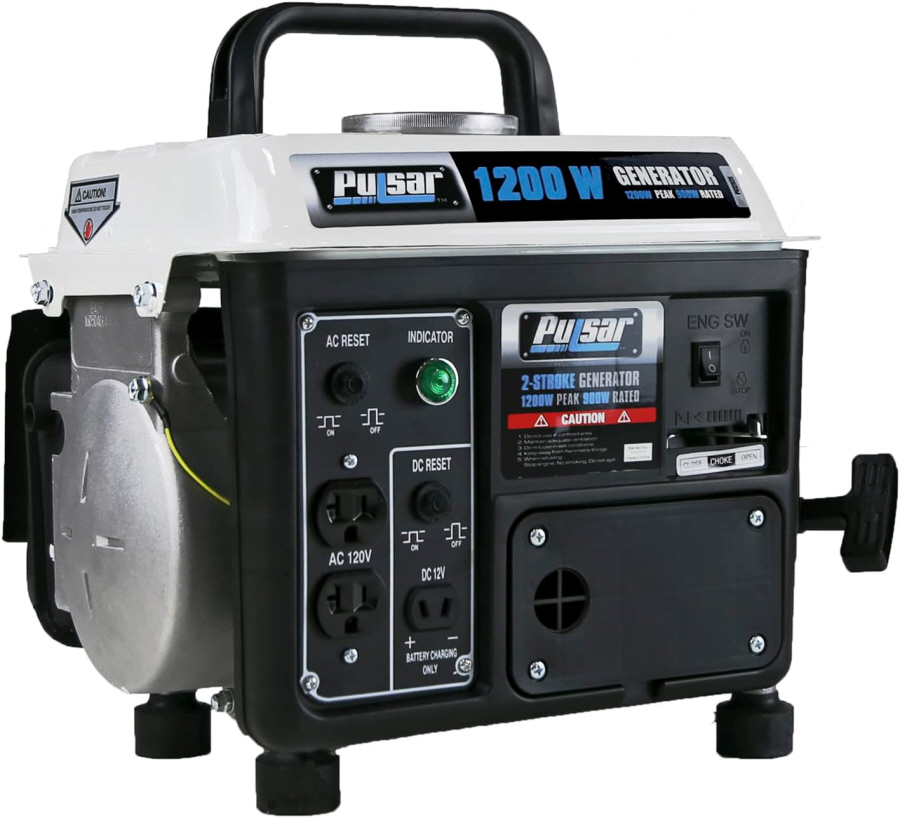 Dual Fuel - Runs
on GAS or PROPANE straight out of the box 4750 starting watts, 3800
running watts with up to 9 hours run time on a full tank of gas and
up to 10.5 hours on a 20 lb. propane tank Powered by a reliable 224cc
Champion engine with Touch Start, push-button electric start (battery
included) Outlets - 120V 30A RV, 120V 30A locking, two 120V 20A household
outlets all secured by Volt Guard, protects your appliances from power
surges Champion Support - 3 year limited warranty with FREE lifetime
technical support
Dual Fuel - Runs
on GAS or PROPANE straight out of the box 4750 starting watts, 3800
running watts with up to 9 hours run time on a full tank of gas and
up to 10.5 hours on a 20 lb. propane tank Powered by a reliable 224cc
Champion engine with Touch Start, push-button electric start (battery
included) Outlets - 120V 30A RV, 120V 30A locking, two 120V 20A household
outlets all secured by Volt Guard, protects your appliances from power
surges Champion Support - 3 year limited warranty with FREE lifetime
technical support Feature: Plug Type or Number is the CSA number of the plug required to match the receptacle on the generator. There are 3 types of plugs with numerous capacity ratings commonly used on portable generators. Current CSA regulations require a 4 prong twist-lock plug for hard-wiring into residence sub-panel. Benefit: The plug number and its matching receptacle number are identification numbers accepted as industry standards. This insures only proper capacity plugs are used. For example, a 125/250V 20amp receptacle would need an L14-20R plug. The CSA/UL/CE number is engraved into the plug and the receptacle for proper identification. Feature:
Full Capacity Outlet describes a receptacle, and its matching plug,
which is design to handle the maximum capacity of the generator.
Usually rated by amperage. The relationship between current, voltage
and wattage is shown as:Current
(in amps) x Voltage (in volts) = Wattage (watts)Therefore,
a 20 amp, 240 volt plug would be a full capacity plug for a 4800
watt or smaller generator (20 amps x 240 volts = 4800 watts) Feature: Circuit Selector Switch allows directing full rated power to the outlet, which is used for direct hookup through a transfer switch connection. Benefit: Flexibility in using power output from generator while guarding against over loading. Only certain receptacles can be used at any one time. Feature: Ground Fault Circuit Interrupter cuts off electricity if some of the current tries to return to ground by a method other than the neutral wire (a fault). It does this by measuring current in the live wire and comparing it to the neutral wire; when these 2 measurements are different; power is disconnected from the receptacle. Benefit: Protects against the hazards of grounding faults from defective tools, or cords. If the ground wire does not make a perfect contact to the ground, the leakage current will flow through the operator to the ground. Of particular importance when working in damp areas or conditions. Feature: Voltmeter - a meter which measurers voltage. Can be built into the generator or purchased as a hand held unit. Benefit: Ensures that the voltage produced is within acceptable range. See Voltage Regulation for acceptable voltage range. Electrical equipment can be damaged by voltage too high or too low. Feature:
Frequency Meter - a meter for measuring frequency of alternating
current. In North America electricity is delivered at 60 cycles
per second (60 Hertz or Hz).
Our
Selection of Portable Generators are now listed on Amazon Feature: Insulation Class identifies maximum allowable operating temperature. Benefit: Insulation class is a coding for generators and electric motors identifying the maximum allowable operating temperature of the windings. The higher the class, the higher allowable temperature. Class A, B, F and H are the most common classes encountered with maximum operating temperatures of 105°C, 130°C, 155°C and 180°C respectively. Generators and engines produce considerable heat, and units built to higher insulation ratings will usually carry a premium price. Ventilate properly to stay within the proper operating temperature. Feature:
Oil Alert is a device designed to shut down the engine when the
crankcase oil drops below a safe level. Some systems use a float
in the engine crankcase to sense the oil level. If the oil falls
below a certain level during operation, the float signals the engine
to shut down. The indicator light blinks on and off to indicate
low oil. Another type uses a sensor in a pressurized engine oil
system. If the oil pressure falls below the preset value during
operation, the engine ignition is grounded out and the engine shuts
down. A time delay allows for low pressure during engine starting.
If the oil system doesn't build sufficient pressure quickly enough
to close the oil sensor switch, the engine will not continue to
run. Feature: Automatic Idle Control reduces engine speed when all electrical loads have been turned off and automatically returns to rated speed when loads are turned back on. Benefit: Reduces fuel consumption. While generally viewed as a good feature, this is not always true. Delays in responding to load demands, particularly during electric motor start up, could lead to premature motor failures. On units with poor voltage regulation: as the engine speed drops, voltage levels may fall below 100 volts from a 240-volt output. If electronic controls or components are still being powered (thermostats, clocks, etc.) but are not drawing enough power to trigger idle control off, damage may occur. If your generator has this feature, review usage and monitor voltage carefully before activating it. Feature: Splash Lubrication - lubrication system where the rotating engine parts splashes and throws oil around the inside of the engine for lubrication. Benefit: Economical. Feature: Pressure Lubrication - lubrication system where an oil pump forces oil throughout the engine. Benefit: Longer engine life. Increased cost. Feature: Automatic Decompression - a feature that reduces the amount of compression in the engine cylinder during start-up. Returns to normal compression after engine starts. Benefit: Decompression makes it easier to pull the starter rope. This is most beneficial for engines with higher horsepower ratings (8 hp and over). Feature: Governor Type - describes the type of governor used to control the speed of the engine as electrical load changes.An air-governor uses the amount of air flow produced by the flywheel to change the throttle setting. If the engine slows down because of an increased load, the reduced air flow allows the throttle to open to speed up the engine. An increase in speed produces more air flow that closes the throttle.A mechanical-governor uses a set of weights to control speed. The faster the weights spin the further out they are flung shutting down the throttle. When the speed drops the weights return closer to their turning axis and the throttle opens. Benefit: Maintaining the correct engine speed (3600 RPM) is required to generate electrical power at 60 Hertz. The correct speed is required to insure the proper voltage levels. The governor of an engine is the device that keeps the speed at or near 3600 RPM. The more sensitive the governor is to changes in speed as loads change the closer frequency will stay to 60 Hz. Mechanical-governors tend to be more effective at maintaining the required engine speed. Feature: OHV - overhead valve engine. The intake and exhaust valves are located, over the cylinder, in a separate component of the engine called the head. Benefit: An engine with OHV is generally considered to be of better quality than units with the valves in the block. Benefits include improved combustion efficiency, reduces fuel and oil consumption, and the increased ability to rebuild engines for longer life. Feature: Cast Iron Cylinder(s) - describes the material used in constructing the cylinders of the engine. Benefit: Engines with cast iron cylinders generally give longer engine life, and are often considered better quality than aluminium. Feature: Fuel Tank Capacity indicates how much fuel the tank holds. Benefit: A large capacity tank allows the generator to run longer without refueling. Feature: Run Time at Specified Load is an estimate of the amount of time the generator will run with a specific percentage of rated load. i.e.: 8 hours @ 50% load. Benefit: This specification gives the operator some indication of how long the generator will run at the specified load. Use this as an estimate only. Why
I Love My Portable Power Generator Now I feel I
need to have a back-up power supply or it could be bad news. Having
one of these units in the back shed or in the basement just makes
common sense. Keep it topped up with gas or propane and you will
never have to worry if you need a pump or a stove top fixture or
a way to charge your 12V car battery or run a small emergency aeration
system for your fish pond. Portable
Generator Reviews This Honeywell Portable Generator lets you take lightweight, easy-to-handle power anywhere. The hard-working 4.5 HP OHV 196cc Honeywell engine delivers 3750 maximum watts; 3000 continuous watts. 4.5-gallon tank runs for 13 hours @ 1/2 load. Four 120V 15/20A outlets handle multiple appliances and tools. Low oil protection, fuel gauge, overload protection and automatic voltage regulation. Surge Watts: 3750, Rated Watts: 3000, Start Type: Recoil, Engine Displacement (cc): 196cc, HP: 4.5, Engine: Honeywell, Run Time: 13 hours @ 1/2 load, Receptacles (qty.): 4, Noise Level (dB): 70, Fuel Type: Gasoline, Fuel Capacity (gal.): 4.5, Low Oil Shutdown: Yes, Battery Required: Yes, Battery Included: No, Dimensions L x W x H (in.): 23 1/4 x 24 x 17 3750 maximum watts; 3000 continuous watts keeps home appliances and equipment running smoothly 4.5 HP OHV 196cc Honeywell engine delivers power and durability 4.5-gallon tank runs for 13 hours @ 1/2 load Four 120V 15/20A outlets handles multiple power needs simultaneously Low oil protection, fuel gauge, overload protection and automatic voltage regulation safeguard your investment Honda
Generators Handi Cart For Honda EU2000i Generator, Model# EU2000
Handi Cart Your Honda portable generator gets even more portable when you add this convenient wheel kit. Lightweight, yet strong. Folds for storage. U.S.A. NorthStar
Trifuel Generator 390cc, 8000 Surge Watts, 6600 Rated Watts NorthStar Trifuel Generator packs 8000 surge watts and 6600 continuous watts! Switches effortlessly from gasoline to dry fuel without powering off and starts fast and easy in all weather. For years of long-lasting power, this generator uses a reliable, 100% copper-wound brushless generator head. NorthStars V-mounts are designed to extend life by dampening and isolating engine vibration. The interlocking V-mounts have a rubber-isolation mount made with a specially formulated vibration-dampening elastomer that provides optimal flexibility. An interlocking bracket design allows NorthStar to use softer rubber, resulting in a smooth-running engine. Easy access control and outlet panel. Frame constructed from ERW hot-rolled steel tubing. The solid base provides a strong foundation for the generator and extends life by serving as a barrier between the ground and the generator. This prevents grass, dirt, dust and other debris from being sucked into the engine and the alternator. Muffler drastically reduces engine noise level. Not for sale in California. Surge Watts: 8, 000, Rated Watts: 6, 600, Start Type: Electric and recoil, Engine Displacement (cc): 390, Engine: Honda GX 390 OHV, Gross Torque: 20 ft-lb at 2, 500 rpm, Rated Watts LP: 6, 200, Rated Watts NG: 5, 200, Surge Watts LP: 7, 200, Surge Watts NG: 6, 400, Run Time: 9 Hours at 1/2 Load, Receptacles (qty.): 5, Noise Level (dB): 74.5, Fuel Type: Gasoline, Propane, or Natural Gas, Fuel Capacity (gal.): 6.5, Low Oil Shutdown: Yes, Battery Required: Yes, Battery Included: No, Dimensions L x W x H (in.): 31 x 23 x 22 Brushless generator heads are proven to be superior in efficiency, performance and lifespan compared to brush-style generator heads Less than 6% THD for use with power-sensitive equipment Cast iron sleeve Control panel has &Quot;push to reset&Quot; circuit breakers Run time meter for monitoring maintenance intervals Replacement parts available from Northern or a Northern retail store NorthStar
PTO Generator 7200 Watt, 14 HP Required Designed for small tractors to run at 6% or less total harmonic distortion. Less gear noise, longer gear life compliments of the gearboxs shaved steel gears. Flexible control panel has two 20 Amp, 120 Volt outlets; one L14-30 Amp, 120/240 Volt locking plug receptacle; thermal overload protection provided by thermal magnet 30 Amp circuit breaker and volt meter. Connects to a 1 3/8in. diameter, 6-tooth spline output shaft that needs to turn at 540 RPM. Engine Required: 14 PTO HP (540 RPM) or more, Shaft Diameter (in.): 1 3/8in., 6-spline input shaft is geared for 540 RPM, Rated Watts: 7, 200, Surge Watts: 7, 800, Run Time: Continuous, Receptacles (qty.): 3, Phase: 1 (4 Wire), Dimensions L x W x H (in.): 25 1/3 x 12 1/2 x 17 1/4 Two 20 Amp 120V receptacles One 30 Amp 120/240V locking plug receptacle Uses NEMA 5-20R and NEMA L14-30R Oil level indicator, cast iron gearbox 100% Copper windings Brushless design, less than 6% Total Harmonic Distortion Bi-directional Thermal overload protection Conveniently located control panel Push button circuit breakers PTO shield protects operator from moving parts Plugs sold separately Use with PTO Trailer, Item# 165959 and PTO Driveline, Item# 165936 Replacement parts available from Northern or a Northern retail store Northern
Industrial Portable Generator 1000 Surge Watts, 900 Rated Watts Lightweight, quiet generator is great for camping, picnics, or anywhere youll need quick power. High-tech engine provides high output with less pollution (perfect for the outdoors). Surge Watts: 1, 000, Rated Watts: 900, HP: 2 1/2, Engine: Mitsubishi OHV, Run Time: 6 Hours @ Full Load, Receptacles (qty.): 2, Noise Level (dB): 63, Fuel Type: Gasoline, Fuel Capacity (gal.): 1 3/16, Low Oil Shutdown: Yes, Dimensions L x W x H (in.): 18 x 13 11/16 x 14 13/16 Two 120V outlets, 12V DC @ 8.3 Amps Maintenance-free brushless generator Circuit breakers Pilot lamp Honeywell
Portable Generator 5000 Surge Watts, 4000 Rated Watts, Model# HW4000L This
durable Honeywell portable generator provides dependable power in
a simple and powerful portable electric generator. Great for residential
applications and for homeowners seeking a reliable backup electric
power generator. Features an OHV engine with oversized muffler for
quiet operation, Smart Start controls and wheel kit for easy portability.
CARB approved for use in all 50 states. Surge Watts: 5, 000, Rated
Watts: 4, 000, Start Type: Recoil, Engine Displacement (cc): 242,
HP: 9, Engine: Honeywell OHV, Run Time: 13 hrs. @ 50% load, Receptacles
(qty.): (4) 120V 15/20VAC, (1) 120/240VAC L1430A, Noise Level (dB):
74, Fuel Type: Gasoline, Fuel Capacity (gal.): 6.5, Low Oil Shutdown:
Yes, Battery Required: No, Battery Included: No, Dimensions L x
W x H (in.): 29 x 29 x 27 16.6 Amps @ 240V Smart Start color-coded
starting controls Simplified power control center 1 1/4in. steel
frame with vibration isolators Portability kit with never-flat wheels
and high-leverage handles Fuel gauge Overload protection SurePower
alternator with auto voltage regulation Spark arrester Includes
liter of oil and oil funnel Honeywell
Portable Generator 6875 Surge Watts, 5500 Rated Watts, Recoil Start,
Model# HW5500L This durable Honeywell portable generator provides dependable power in a simple and powerful portable electric generator. Great for residential applications and for homeowners seeking a reliable backup electric power generator. Features an OHV engine with oversized muffler for quiet operation, Smart Start controls and wheel kit for easy portability. CARB approved for use in all 50 states. Surge Watts: 6, 875, Rated Watts: 5, 500, Start Type: Recoil, Engine Displacement (cc): 337, HP: 11, Engine: Honeywell OHV, Run Time: 11 hrs. @ 50% load, Receptacles (qty.): (4) 120V 15/20VAC, (1) 120/240VAC L1430A, Noise Level (dB): 76, Fuel Type: Gasoline, Fuel Capacity (gal.): 6.5, Low Oil Shutdown: Yes, Battery Required: No, Battery Included: No, Dimensions L x W x H (in.): 29 x 29 x 27 22.9 Amps @ 240V Smart Start color-coded starting controls Simplified power control center 1 1/4in. steel frame with vibration isolators Portability kit with never-flat wheels and high-leverage handles Fuel gauge Overload protection SurePower alternator with auto voltage regulation Spark arrester Includes liter of oil and oil funnel Honeywell
Portable Generator 9375 Surge Watts, 7500 Rated Watts, Electric
Start, Model# HW7500EL This durable Honeywell portable generator provides dependable power in a simple and powerful portable electric generator. Great for residential applications and for homeowners seeking a reliable backup electric power generator. Features an OHV engine with oversized muffler for quiet operation, Smart Start controls and wheel kit for easy portability. CARB approved for use in all 50 states. Surge Watts: 9, 375, Rated Watts: 7, 500, Start Type: Electric/recoil, Engine Displacement (cc): 420, HP: 15, Engine: Honeywell OHV, Run Time: 7 hrs. @ 50% load, Receptacles (qty.): (4) 120V 15/20VAC, (1) 120/240VAC L1430A, Noise Level (dB): 78, Fuel Type: g, Fuel Capacity (gal.): 6.5, Low Oil Shutdown: Yes, Battery Required: No, Battery Included: Yes, Dimensions L x W x H (in.): 29 x 29 x 27 22.9 Amps @ 240V Smart Start color-coded starting controls Simplified power control center 1 1/4in. steel frame with vibration isolators Portability kit with never-flat wheels and high-leverage handles Fuel gauge Overload protection SurePower alternator with auto voltage regulation Spark arrester Includes liter of oil and oil funnel ETQ
Portable Generator 2250 Watts, Model# TG17M41 This ETQ portable generator is lightweight and portable, yet powerful enough to handle tough jobs. Surge Watts: 2, 250, Engine Displacement (cc): 163, HP: 4, Engine: 163cc OHV 4 Stroke, Receptacles (qty.): 4, Noise Level (dB): 65 at 23 Feet, Dimensions L x W x H (in.): 21 7/16 x 18 5/16 x 18 5/16 1750 running watts Two 120V, 20 Amp outlets; one 12V DC plugin Fuel efficient 4-stroke engine runs up to 11 hours @ 50% load Excellent choice for camping, hunting or wherever extra power is needed EPA approved Honda
Horizontal OHV Engine for Generators 270cc, GX Series, Tapered 7/8
in. x 4 11/64in. Shaft, Model# GX270UTVA2 The Honda 270cc GX Series OHV commercial-grade engine is designed for the most demanding commercial applications. It has set an industry standard for reliability and durability. Overhead Valve design offers cooler, fuel-efficient operation and cast iron cylinder sleeve provides longer service life. The GX is reliable, easy starting and quiet running. Meets EPA and CARB emission levels standards. This legendary engine has earned the reputation as the preferred engine for construction equipment. Common applications: Generators. Engine Displacement (cc): 270, Start Type: Recoil, Application: Generator, Engine Type: GX series OHV - commercial duty, Rated Power (HP): 8, Torque (ft./lbs.): 13.10 at 2, 500 RPM, Shaft Output: Horizontal, Crankshaft: V type, Shaft Diameter (in.): 7/8 (tapered), Shaft Length (in.): 4 11/64, Shaft Rotation (From PTO Shaft Side): Counterclockwise, PTO Height (in.): 5 1/4, Cylinders (qty.): 1, Cylinder Bore: Cast iron, Bore x Stroke (in.): 3.0 x 2.3, Compression Ratio: 8.2:1, Cooling System: Air cooled, Air Cleaner Type: Dual element, Fuel Type: Gasoline, Fuel Tank Capacity (qt.): 5.6, Fuel Filter: Fuel tank filler neck strainer, Oil Capacity (qt.): 1.16, Lubrication System: Forced splash, Ignition System: Electronic, Governor System: Centrifugal mechanical, Carburetor: Float, external vent, Throttle Control: Remote (wire), Choke Control: Manual, Max. RPM: 3, 600, Bolt Circle (in.): 5, 6 1/2, Mounting Base L x W (in.): 7 11/16 x 3 3/16 to 3 11/16, Dimensions L x W x H (in.): 15 x 16 7/8 x 16 1/8, EPA/CARB Approval (California Air Resource Board): Yes Automatic decompression for easy starting Heavy-duty ball bearing supported crankshaft Double walled heavy-duty tank with in tank fuel strainer Fits USA generator sets Does not fit Honda PE generators or others with metric shaft Coleman
5000W Progen Generator 6000 Watts surge, 5000 Watts continuous output. Cast iron cylinder sleeve. Low oil shutdown protects engine, cradle isolators reduce crawling and vibrating. Has one 240V 20 Amp twistlock receptacle and two 120V 20A duplexes. Circuit breaker, dual air cleaner. Recoil start. 24.5 in. L x 20 in. W x 22 in. H. U.S.A. Surge Watts: 6, 000, Rated Watts: 5, 000, Start Type: Recoil, HP: 10, Engine: Briggs Intek OHV, Run Time: 8 hours, Fuel Capacity (gal.): 5, Low Oil Shutdown: Yes, Dimensions L x W x H (in.): 24 1/2 x 20 x 22 10 HP Briggs Intek OHV engine 5 gallon fuel tank runs 8 hours at 50% load NorthStar
Generator 270cc, 5500 Surge Watts, 4500 Rated Watts, Gasoline Industrial Honda engine has low Oil Alert shutdown protection and Hondas QUIETEST engine muffler. Only 6% total harmonic distortion for use with voltage-sensitive equipment like computers. Maintenance-free, brushless design. NorthStars V-mounts are designed to extend life by dampening and isolating engine vibration. The interlocking V-mounts have a rubber isolation mount made with a specially formulated vibration dampening elastomer that provides optimal flexibility and stiffness and interlocking brackets that protect the rubber mounts. This interlocking design allows NorthStar to use softer rubber, resulting in a smooth-running engine. Frame constructed from ERW hot-rolled steel tubing. The solid base provides a strong foundation for the generator and extends life by serving as a barrier between the ground and the generator. This prevents grass, dirt, dust and other debris from being sucked into the engine and the alternator. 6.5 gallon tank powers generator for 13.4 hours @ 1/2 load, 9.2 hours @ full load. Compatible with Reliance transfer switch. Not for sale in California. Surge Watts: 5, 500, Rated Watts: 4, 500, Start Type: Recoil, Engine Displacement (cc): 270, Engine: Honda GX270, Gross Torque: 14 ft-lb at 2, 500, Run Time: 13.4 Hours at 1/2 Load, Receptacles (qty.): 3, Noise Level (dB): 73, Fuel Type: Gasoline, Fuel Capacity (gal.): 6.5, Low Oil Shutdown: Yes, Battery Required: No, Battery Included: No, Dimensions L x W x H (in.): 31 3/4 x 23 5/8 x 22 1/4 Two 20 Amp 120V receptacles One 20 Amp 120V/240V locking plug receptacle Uses NEMA L14-20R, and NEMA L14-20R locking plug receptacles Cast iron sleeve 100% Copper windings Brushless generator heads are proven to be superior in efficiency, performance and lifespan compared to brush-style generator heads Less than 6% THD for use with power-sensitive equipment Conveniently located control panel Push button circuit breakers Baked on poly coat paint prevents scratches and corrosion Plugs sold separately Optional wheel kit Item# 165916 sold separately Replacement parts available from Northern or a Northern retail store All
Power America Portable Generator 2000 Surge Watts, 1650 Rated Watts,
Model# APG3010 The All Power America portable generator is a lightweight, quiet portable generator that delivers long run time. Not available for sale in California. Surge Watts: 2, 000, Rated Watts: 1, 650, Start Type: Recoil, Engine Displacement (cc): 119, HP: 4, Engine: OHV 4 stroke, Run Time: 9.5 hours, Receptacles (qty.): 3:(2) 120V, (1) 12V DC, Noise Level (dB): 68, Fuel Type: Gas, Fuel Capacity (gal.): 2, Low Oil Shutdown: Yes, Battery Required: No, Battery Included: No, Dimensions L x W x H (in.): 20.87 x 15.35 x 17.52 Two 120V AC outlets One 12V DC (8.3A) outlet 13.75 Amps @ 120V 68dB noise level EPA approved Built-in carry handle All
Power America Portable Generator 7500 Surge Watts, 6000 Rated Watts,
Model# APG3075 Powerful All Power America portable generator is ideal for jobsite use or emergency power and features a mobility kit for easy transport. Surge Watts: 7, 500, Rated Watts: 6, 000, Start Type: Electric with recoil backup, Engine Displacement (cc): 389, HP: 13, Engine: OHV 4 Stroke, Run Time: 9, Receptacles (qty.): 4, Noise Level (dB): 75, Fuel Type: Gas, Fuel Capacity (gal.): 6.6, Low Oil Shutdown: Yes, Battery Required: Yes, Battery Included: No, Dimensions L x W x H (in.): 27.87 x 21.06 x 23.62 Two 120V AC outlets One 120V 3-prong locking plug One 120/240V locking outlet One 12V DC (8.3A) outlet 50 Amps @ 120V; 25 Amps @ 240V Includes mobility kit with 8in. semipneumatic wheels and fold-down handle EPA approved All
Power America Propane Generator 6000 Watt, Model# APG3560 Generator comes with a mobility kit for easy maneuverability on the jobsite. Not for sale in CA Surge Watts: 6, 000, Rated Watts: 5, 000, Start Type: Recoil/Electric start, Engine Displacement (cc): 389, HP: 13, Engine: OHV 4 Stroke, Run Time: 8.5, Receptacles (qty.): 4, Noise Level (dB): 75, Fuel Type: Propane, Fuel Capacity (gal.): 5, Low Oil Shutdown: yes, Battery Required: yes, Battery Included: No, Dimensions L x W x H (in.): 27.56 x 21.06 x 23.03 6000 surge Watts; 5000 running Watts 13 HP OHV engine with electric start Two 120V outlets One 120V twist locking outlet One 120/240V twist locking outlet One 12V DC outlet @ 8.3 Amps 41.6 Amps @ 120V 20.8 Amps @ 240V 20-lb. propane tank provides up to 8 hours run time @ 1/2 load (propane and tank not included) Automatic fuel shutoff valve Approx. 27 1/2in.L x 21in.W x 23 1/2in.H Includes mobility kit with 8in. semipneumatic tires, handle and propane hose All
Power America Portable Diesel Generator 6500 Surge Watts, 5000 Rated
Watts, Model# APG3201 The
All Power America Portable Diesel Generator comes with a mobility
kit for easy maneuverability on the jobsite. Surge Watts: 6, 500,
Rated Watts: 5, 000, Start Type: Electric, Engine Displacement (cc):
416, HP: 10, Engine: 4-stroke, Run Time: 8, Receptacles (qty.):
4, Noise Level (dB): 75, Fuel Type: Diesel, Fuel Capacity (gal.):
3.3, Low Oil Shutdown: Yes, Battery Required: Yes, Battery Included:
Yes, Dimensions L x W x H (in.): 37.40 x 22.05 x 31.10 Diesel engine
with electric start Two 120V outlets One 120V twist locking outlet
One 120/240V twist locking outlet One 12V DC outlet @ 8.3 Amps 41.6
Amps @ 120V 20.8 Amps @ 240V Includes mobility kit with 10in. semipneumatic
tires and handle Pond
Report Store
The pond report also has information on: Algaecides & Bacteria | Deicers & Bubblers | Weed Removal | Liquid Bacteria | Pond Pumps & Fountains | Aeration | Winter Pond Care | Algae Control | Pond Liner | Muck Pellets | Build a Solar Aerator | Rotary Vane Compressors | Floating Fountains | Building a Pond | Linear Air Compressors & Pumps | Weighted Airline | Diffusers & Airstones | Solar Aeration Systems | DC & Battery Operated Pumps | Windmill Aeration | Dock Bubbler Packages | Building a Waterfall | Dyes & Colorants | Consultations | Questions & Answers | Links & Resources | Eurasian Milfoil | | Mosquito Control | Pondkeeper Treatments | Aeration Systems | Septic Bacteria | Grease Trap Blocks | Compost Aeration | Dissolved Oxygen Meters | SOTR & Pumping Rates | Portable Generators | Duckweed Control | Pond Plans & Pond Building Books & Guides | © 2007 - 2024 The Pond Report about us | privacy policy | contact us |
|||
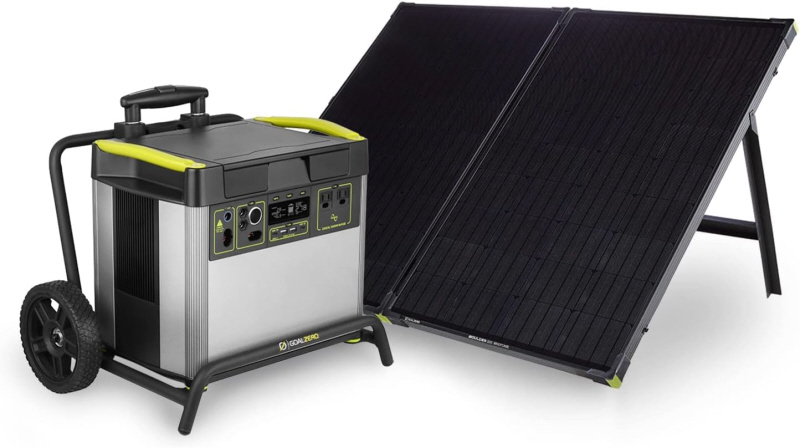
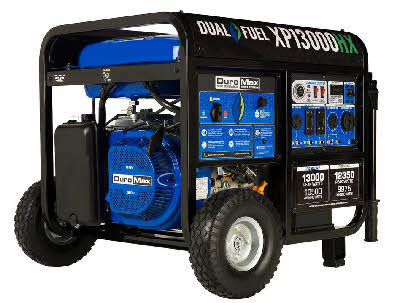
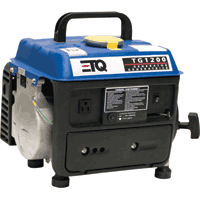 ETQ Portable Generator — 1200 Surge Watts, 1000
Rated Watts, Model# TG1200
ETQ Portable Generator — 1200 Surge Watts, 1000
Rated Watts, Model# TG1200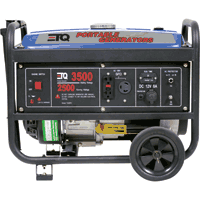 ETQ Portable Generator — 3500 Surge Watts, 2800
Rated Watts, Model# TG28P41
ETQ Portable Generator — 3500 Surge Watts, 2800
Rated Watts, Model# TG28P41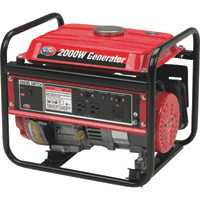 All Power America Portable Generator — 2000
Surge Watts, 1400 Rated Watts, Model# APG-3014
All Power America Portable Generator — 2000
Surge Watts, 1400 Rated Watts, Model# APG-3014 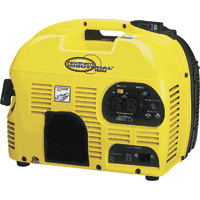 Northern Industrial Portable Generator — 1000
Surge Watts, 900 Rated Watts
Northern Industrial Portable Generator — 1000
Surge Watts, 900 Rated Watts